Russian Ministry of Health has announced a Week of responsible attitude to oral health
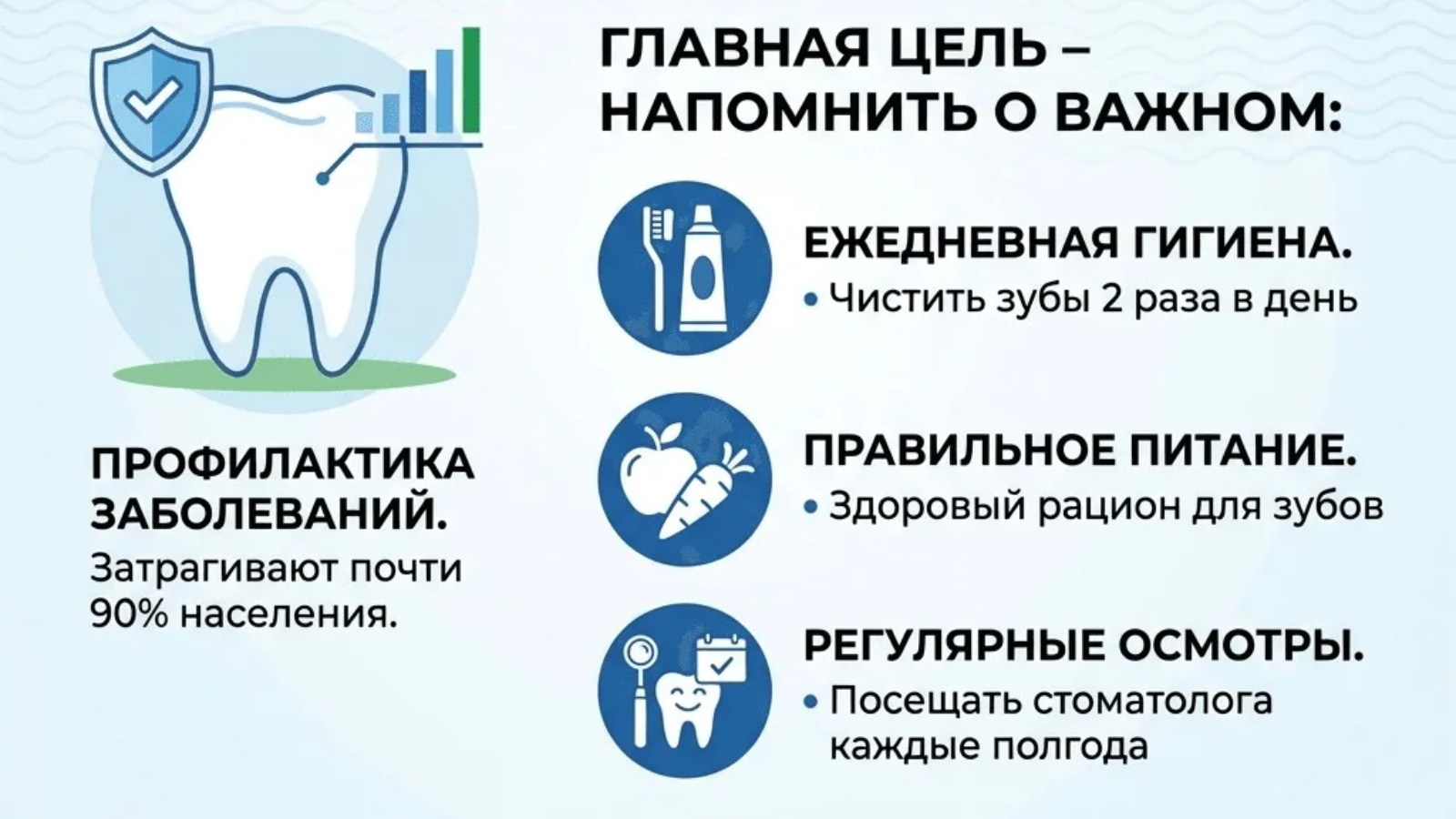
The oral cavity is a mirror of the general condition of the body. Every year, on March 20, World Oral Health Day is celebrated, and a whole week is devoted to responsible treatment of teeth, gums and mucous membranes. Oral diseases affect billions of people: according to WHO, caries affects about 3.5 billion people, and periodontitis affects 1 billion. But the good news is that up to 90% of problems can be prevented by simple habits. Let's look at why it's worth paying special attention this week and how to maintain oral health for every day.
Why does oral health affect the whole body?
Teeth and gums are not an isolated area. Bacteria from the oral cavity can enter the bloodstream, causing systemic problems. For example, chronic gum inflammation (periodontitis) increases the risk of cardiovascular diseases by 20-50%, diabetes by 30%, and even pregnancy complications. Studies show a link with rheumatoid arthritis and pneumonia: pathogens like Porphyromonas gingivalis provoke inflammation in the body.
Caries begins with plaque, a film of bacteria that feed on sugars. Without care, it turns into acids that destroy the enamel. And the gums turn red, bleed and recede without attention, exposing the roots. In Russia, according to the Ministry of Health, 80% of adults have caries, and half have periodontitis after the age of 40. Prevention reduces these risks and saves time on treatment.