Day patient department works in the polyclinic #2 of the Nizhnekamsk Central District Multifunctional Hospital
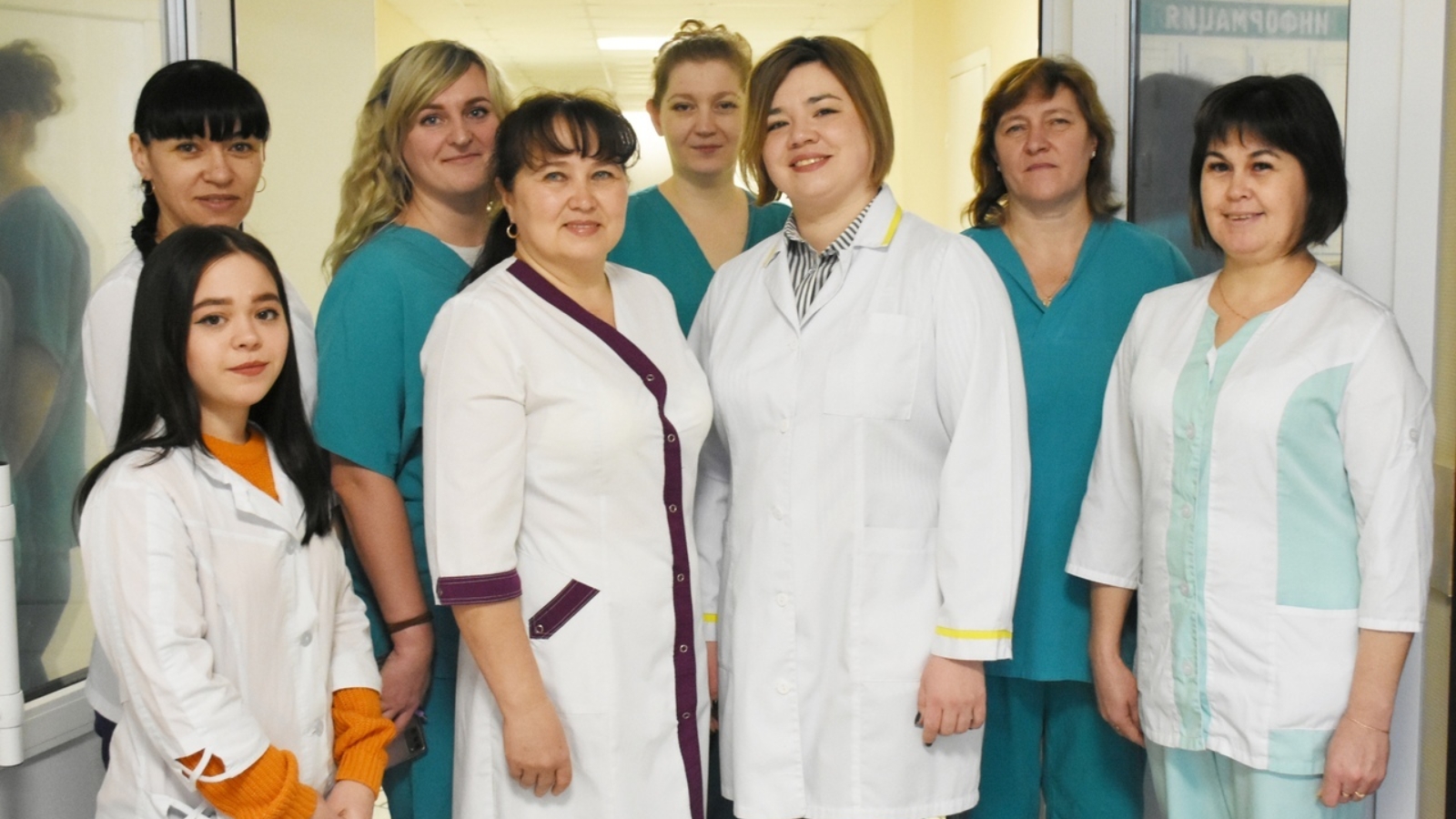
In the red zone for more than two months, the full-time department of the day patient facility of the polyclinic #2 of the Nizhnekamsk Central District Multifunctional Hospital has been operating. There, before the coronavirus pandemic, patients with chronic diseases of the lungs, cardiovascular system and musculoskeletal system were rehabilitated. This department was closed in April last year – due to the outbreak of the pandemic, the provision of planned medical care was suspended and 10 women - one doctor, five nurses and four orderlies set off to work in the hospital.
In August, our colleagues returned from the red zone to their department to help patients to recover from a coronavirus infection. "In the hospital, because of the anti-plague suits, all the doctors are almost the same. But the patients we cared for in the red zone and who came to rehabilitation after discharge still recognized us", said Natalia Saifulina, head of the department.
"There was a 30-year-old woman in the hospital; her lungs were affected by 80%. After discharge, she came to us for rehabilitation, but, unfortunately, the changes in the lungs are already irreversible, her health condition has not improved much. All her life, this woman must take specific medications, do breathing exercises and physical therapy," N. Saifulina added. - Our other patient, an elderly woman, stayed on the lung ventilator for a month. For three months woman lived in the village, she was so weak that she practically did not get up. And then she admitted to us for rehabilitation – on her own feet. She came with her daughter, who was also ill and was treated at home. This elderly woman after rehabilitation in our department got much better. In general, we are very happy with the results, when patients who were in the hospital in a serious health condition can then admit to us for rehabilitation, and we can help them return to a full life."
The department worked so until the winter, and on 1 December, the women returned to the hospital – the epidemiological situation was then extremely tense, there were more and more patients, and doctors were needed there, on the front line.
"It was especially difficult in the intensive care wards at the end of November, when the number of patients, including severe ones, increased. It was probably harder in June, on our first shift, because everything was new to us. And then we got used to it," N. Saifulina said. - But it was still difficult for everyone - in our department, patients are more severe, and when we transferred them to other floors under the supervision of colleagues, we were happy – the person became easier, he will soon go home. In such circumstances, the support of colleagues is very important. It's probably a big word, but it's true - there are no indifferent people in the hospital. Everyone is a professional in their field, who treats patients very humanely. The chief physician of Nizhnekamsk Central District Multifunctional Hospital Mars Kharisovich supports us. Once a week, with him and Elvina Rustamovna, we made the rounds of the hospital. During this round, every patient is examined; a lot of time was spent on those who were in the intensive care unit and intensive care wards. Therefore, the round took at least 4 hours, and when we reached the 6th floor, we almost fell from fatigue. We see all this from the inside, especially those employees who work with the most difficult patients. If all this is emotionally difficult for us, it is difficult to imagine how the patients themselves cope with it. Therefore, you need to think about your health and the health of your loved ones, and make a choice in the matter of vaccination. If there are no contraindications, it is better to get vaccinated against coronavirus – so you will help your immune system to cope with the disease. And help us – we want it all ended rather that the coronavirus has become a common seasonal disease like the flu, and so we soon got back to the departments for our patients."