"Colleagues from the emergency room of the hospital were seen more often than the parents»
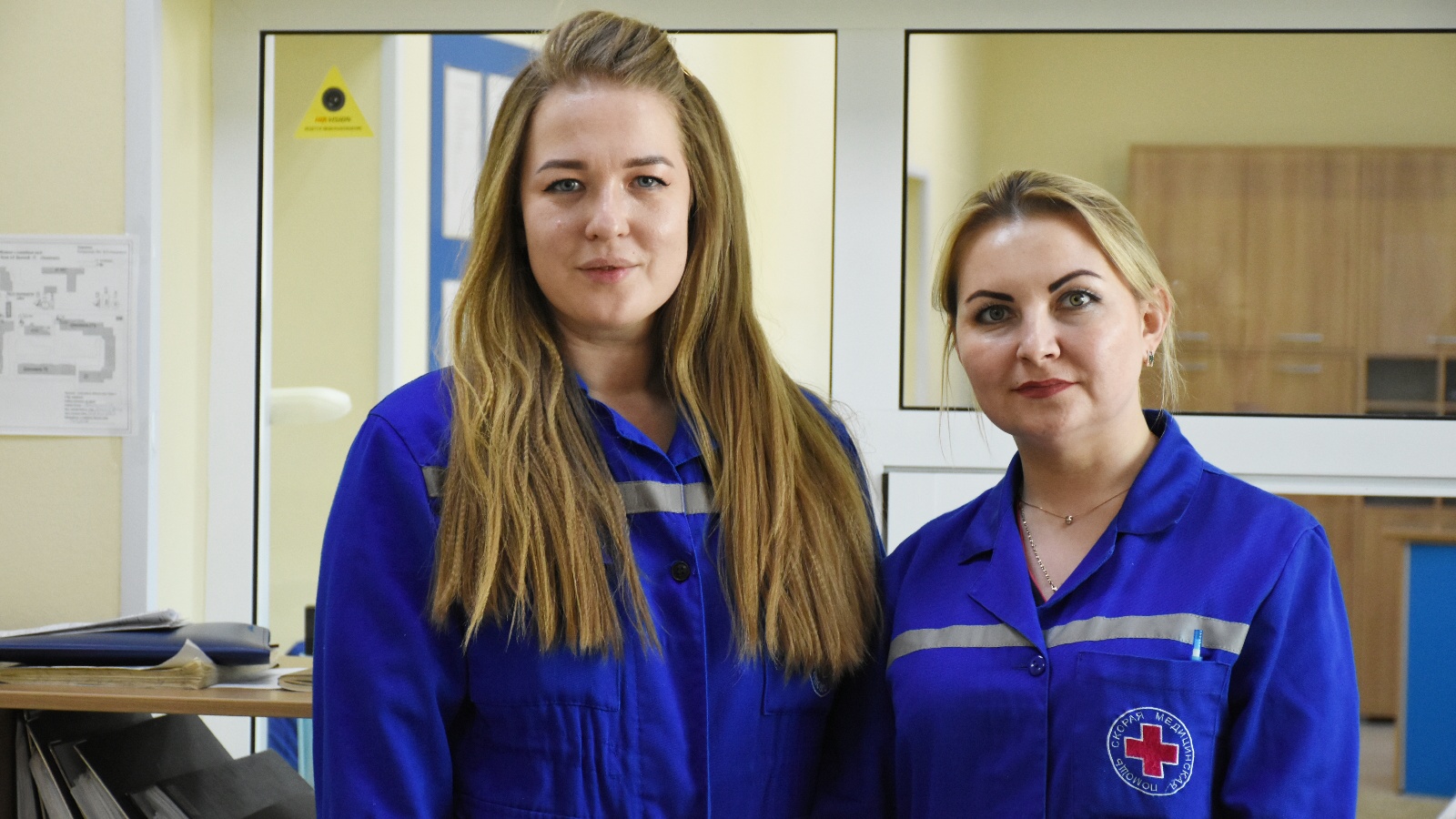
Exactly a year ago, the Nizhnekamsk ambulance station began receiving the first calls from Nizhnekamsk residents with suspected COVID-19. Now it is remembered with surprise, but then the dispatchers collected anamnesis and clarified whether the person was abroad, in which country and with whom he had contacts. Based on this, the decision was made which team should go to the call. Paramedics of the mobile ambulance team Nailya Garifullina and Alsu Yagafarova were among the first to start working in anti-plague suits. They recall that at that time people were suspicious of any information about the coronavirus, as if it did not exist – it was far from abroad, it was unlikely to reach us. Therefore, when the paramedics arrived in protective suits, the patients were frightened, and some even behaved aggressively.
About the beginning
N. Garifullina did not see her mother and brother for six months – she did not want to put them in danger. And the parents of A. Yagafarova were categorically against the fact that their daughter worked in the "coronavirus" brigade. However, the girls, like other doctors, helped people despite the fact that they could get infected themselves.
"It was not scary to go to the first calls – we did not know what kind of disease it was, how it could end, and we had not yet seen patients who were suffocating," N. Garifullina admitted. “The coronavirus is dangerous because it is not visible, like a heart attack or stroke. That is, the sick person could be active, calmly talking, he did not have obvious shortness of breath, but the pulse oximeter (a device for measuring the level of oxygen in the blood) already showed low numbers. We had to persuade them to take a CT scan, but many flatly refused. I remember the very first challenge, when we had to put on an anti-plague suit. A young man came from abroad and complained about the temperature. If there was no wariness about the coronavirus, we would have thought it was just a viral infection. His saturation was low, but despite all our persuasions, the patient refused to go for an examination. We returned to the station, the manager called the patient, explained everything once again, and only after that we took the man for a CT scan, and then hospitalized him."
About the most difficult
At first, because of ignorance, the relatives did not notice that the person was ill. Paramedics, even without a pulse oximeter, determined with the naked eye that most of the lungs were already affected and, most likely, there were chronic diseases. The man just sat there, panting so much that he couldn't talk. Some had critically low blood oxygen levels. Someone was waiting for everything to pass on its own, someone was sure that no one needed old and sick people, someone was told by neighbors that there were huge queues in the hospital, no one would come and there was no point in calling an ambulance. Then I had to explain that there is no gradation, that doctors helped everyone who needed help, and that they needed to go urgently. Then the family began to cry, because they already understood that everything could end sadly.
"An extremely serious patients were immediately taken to the hospital and accompanied to the red zone, so as not to waste time in the emergency room. Thank God, this rarely happened. And although we ourselves have not been crying for a long time, but we worry about everyone and then ask our colleagues in the hospital how our patients were. There were situations when we thought that everything would be fine – the person talked to us, joked, but then the condition became much severe and the person passed. When we find out that the patient is doing better or is being discharged, we are happy and forget about him or her. Unfortunately, those who passed stay in memory."
About the waves of morbidity
The two peaks of the incidence of COVID-19, which occurred in August and the beginning of winter, paramedics recall with a shudder: "It was terrible, God forbid that everything happens again. We didn't even know how we got through it." Doctors did not sleep for days, stuffy suits made it difficult to talk calmly and collect anamnesis, and during the shift the team went on 20-22 calls – this is a lot, given that the patient needs to be taken to a CT scan and hospitalized. In addition, the CT scanner sometimes overheated, and it also needed a break, so there was a queue of several ambulances. That is, no matter how much the doctors wanted to do everything faster, they could not. After being hospitalized, the team would stop by the station, change their suits, process the car, and drive straight to the next call.
About patients
"People waited for us for a long time and met us with anger," recalls A. Yagafarova. “For some reason, many people do not understand that we provide assistance primarily in cases where there is a threat to life. For example, there are two calls – one person complains of a temperature, and the second has both a temperature and severe shortness of breath. Of course, we will help everyone, but first we will go to the one who needs it most urgently."
About colleagues
"The coronavirus has united people," N. Garifullina shared. “We have the right to enter the hospital only in extreme cases, so we rarely crossed paths with the employees of the red zone. But colleagues from the Radiology Department, where we delivered patients for CT scans, and from the emergency room of the hospital, were seen more often than their parents. We all understood and felt sorry for each other. Everyone was hoping it would end tomorrow. If we had known that COVID would last for a long time, I don't know how we would have managed."
About help
Doctors hospitalized severe patients, both literally and figuratively, almost with God's help. If usually during transportation, medical workers can turn, for example, to neighbors or passers for help to carry the stretcher to the ambulance, then in the case of coronavirus, it is forbidden to involve strangers, since they can become infected. There were several cases when doctors asked for help the Ministry of Emergency Situations – the patient could not move by himself and was so heavy that two fragile females could not move him no matter how much they would want it to be done. Rescuers put on anti-plague suits and helped to hospitalize the person.
About an attitude
"I can't say that the attitude towards doctors has changed much. Those who valued us before the coronavirus began to respect us even more. Those who were offended by medicine did not change their opinion. Most often, those who are offended are those whom we could not help,” said N. Garifullina. “There are many factors here – late treatment, concomitant diseases, and so on. People think they're right and we're wrong. Unfortunately, until you get to the hospital, you will not understand what it is. But God grant that as few people as possible are hospitalized there. It is OK they do not understand us and continue to think that we do not work well, the main thing is that they are healthy and alive."
About the miracle
"There were many good cases, but they are quickly forgotten," N. Garifullina shared. “We often see how relatives carry their elderly mothers, fathers, grandparents to the ambulance in their arms. It's a miracle. Every time I think: "God grant us all such an old age." And to live up to it and be in an adequate condition, you need to take your health more seriously. There are two types of patients: one with each sneeze is completely examined, and the second is waiting for it to pass by itself. It is necessary to find a middle ground: go to the doctor on time, follow their appointments, do not cancel the treatment that the doctor prescribed, and do not ignore preventive medical examinations and medical examinations. Be healthy and take care of yourself and your loved ones!"