World Hospice and Palliative Care Day
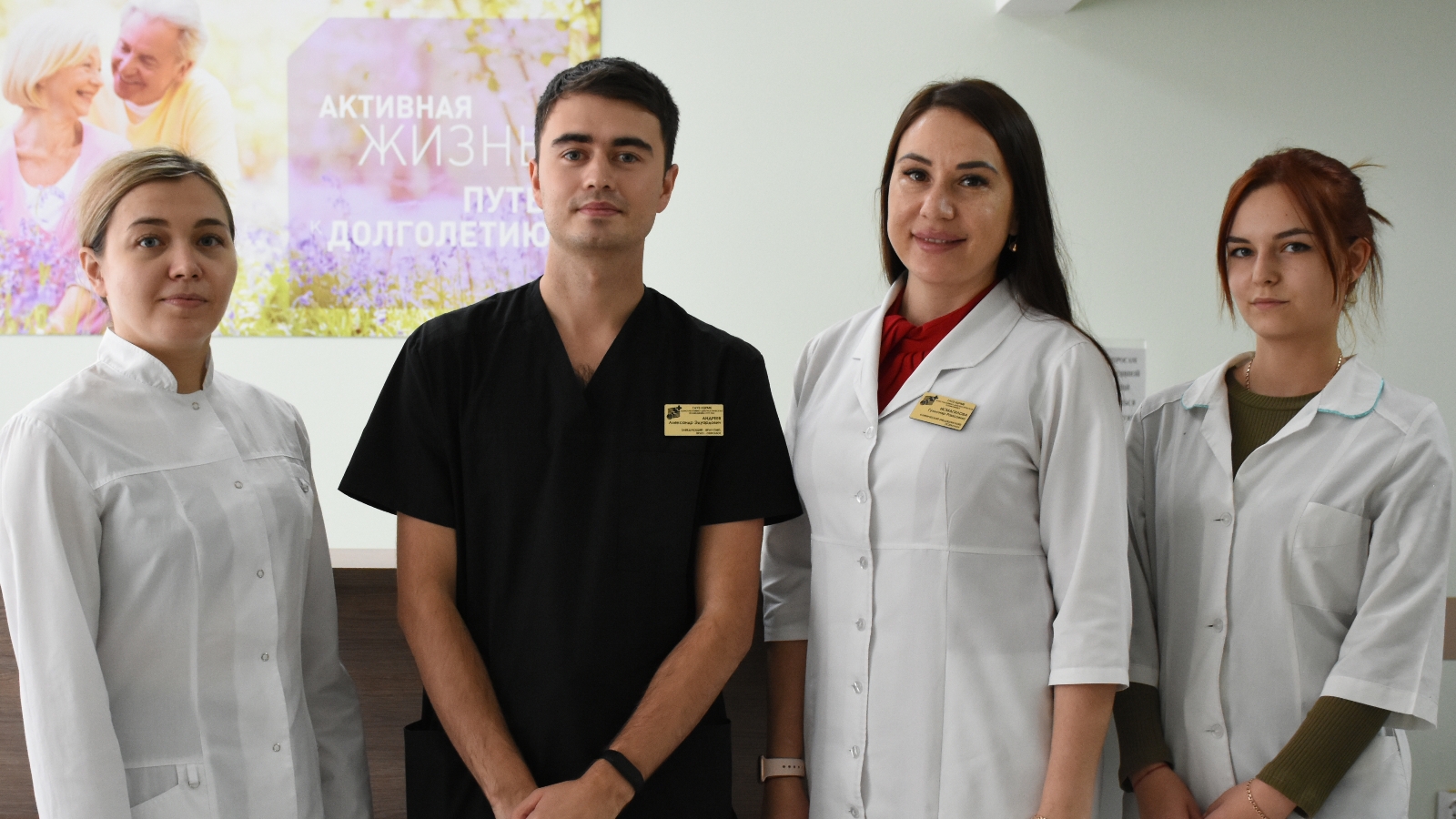
During an interview, each medical professional admits that the most important reward is to see how the patient recovers and goes home. The palliative care service staff has a different task – to make the rest of the life as easy as possible for a seriously ill patient, so that the person does not suffer from terrible pain. And when a person dies, medical staff also grief and cry.
Saturday marked World Hospice and Palliative Care Day. In Nizhnekamsk, there is no hospice, but in a consultative-diagnostic polyclinic in Nizhnekamsk Central Regional Multifunctional Hospital operates a palliative team of 6 people. They are the head of visiting nursing palliative care of Consultative-Diagnostic Polyclinic Alexander Andreev, doctor on palliative care Ilnara Hamadullina, medical assistant Aliya Matrosova, nurses Albina Mikhaylova and Angelina Asseed, and medical psychologist Gulsiyar Ismagilova. If necessary, narrow specialists, such as surgeons, urologists, resuscitators, also join the team. Sometimes, the team takes care of a patient for two years, and sometimes patients observed for only a few days… On the eve of the professional holiday, we talked to medical staff about attachment to dying patients, compassion, and what people talk about before they die.
The team head Alexander Andreev: "Even if you can't cure it, you can always help people!"
"Our main task is to correct pain relief for those patients who are no longer helped by conventional analgesics. Palliative care is primarily aimed at relieving the symptoms of the disease, but not at prolonging patients' lives, and this should be taken into account. Unfortunately, many patients, and especially their relatives, do not understand this. During the patient's visit, we also patiently answer all the relatives' questions because it is no less difficult for them, and they also need our help very much. We work with all of them individually. Sometimes we can't find a common language with patients; they don't understand us due to the severity of the condition, sometimes relatives can't understand and accept that their loved one is leaving. And we need to do everything to ease his torment. I am sure that even if you can not cure, you can always help people!
"If we speak in the dry language of numbers, only in the last nine months 222 of our patients have passed away. The first year of work was especially challenging; there was a lot of mental anguish. You can't be indifferent in our profession, but we still get used to seeing human pain. We also had young patients who were only 18-20 years old, and they did not even live to 30. We feel great sorrow for such young patients, because their life has only just begun, and is already running out.
Our families, children, and some hobbies help us to unload our psychological load. For example, I am fond of riding sports and participate in competitions with dogs. The psychologist well supports our nurses. Since our nurses are very emotionally worn out, the psychologist helps them unload and switch for a while. Our service is very popular today. We understand that for us to be able to work effectively, we need to keep ourselves in good shape. That's why our team is full of friendship and mutual support."
The paramedic Aliya Matrosova: “You can not confuse with anything else that expression of the eyes when a person says "Thank you!" from the bottom of his heart."
"I had the necessary theoretical skills in nursing. After nursing school in my native Yelabuga, I worked in a teenage drug treatment office, and after moving to Nizhnekamsk, I joined the palliative care service.
First, we get to know the patient and their relatives, and when we start performing patient care, an emotional connection forms. After all, we enter the patient's intimate world – we change diapers, help to go to the toilet, and people get used to us, get attached. They catch our mood, are interested in what is happening in our lives, congratulate us on holidays, and thank us. You can not confuse with anything else that expression of the eyes when a person says "Thank you!" from the bottom of his heart.
The most painful thing for a person is when cancer metastasizes, the whole body hurts. Young people develop cancer faster because of their active metabolism, so they leave sooner than older patients. Sometimes you touch a person, and they ask you not to touch them because the pain still does not go away, despite strong painkillers.
Young people, who are between 35 and 45 years old, admit that they want to live longer. And the elderly want to leave quietly, so that their torment will end as soon as possible. Many people talk about their work, children, grandchildren, some remember their grievances, others complain, and some are silent and want us to leave as soon as possible to be left alone. For us, the most important thing is that the patient does not feel pain. A few days before death, a person usually does not share anything. He is in pain, has no appetite, and is waiting for an end to come. And a few months before they leave, many patients want to come to terms with relatives they haven't spoken to for years so that they can forgive themselves and others. And they want us to lead a healthy lifestyle, monitor our health, and not offend or be offended by our relatives."
We congratulate our dear colleagues on their professional holiday! We wish you strength, patience, good health, love, and peace in your homes! Thank you for everything you do!